Garbh Sanskar: Ancient Wisdom for Healthy, Intelligent Baby and Strong Parental Bond
What is Garbh Sanskar and Why is it Important During Pregnancy?
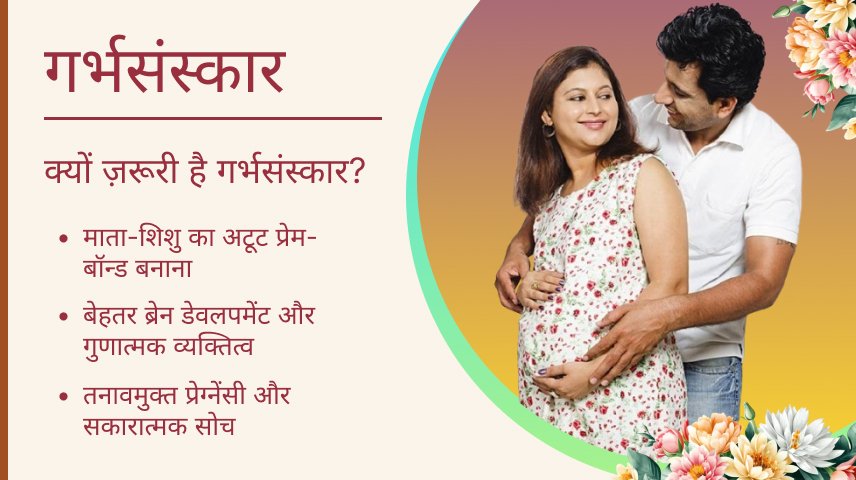
The term Garbh Sanskar comes from Sanskrit—Garbh means womb, and Sanskar means values or education. It refers to consciously instilling positive impressions and nurturing qualities in the baby while still in the womb. It’s a process that goes beyond physical health, aiming to develop the child’s emotional stability, intelligence, and moral strength.
Why Garbh Sanskar Matters
Supporting Healthy Physical Development in the Womb
A mother’s balanced diet, regular physical activity, and stress-free lifestyle are key factors in the baby’s growth. Garbh Sanskar emphasizes sattvic (pure, nutritious) foods, hydration, and gentle exercises like prenatal yoga, which improve blood circulation, support organ development, and ensure a healthy birth weight.
Boosting Baby’s Brainpower, Memory, and Creativity
Modern neuroscience confirms that the fetal brain starts developing early in pregnancy and is highly receptive to stimuli. Listening to soothing music, chanting mantras, reading inspirational literature, and engaging in mindful conversations can stimulate the baby’s brain and improve memory, attention, and creativity.
Promoting Emotional Stability and Positive Mindset
A calm, happy mother produces hormones like oxytocin and serotonin, which positively influence the baby’s emotional well-being. By practicing meditation, deep breathing, and gratitude, the mother can reduce stress hormones that could otherwise affect the baby’s temperament.
Building Spiritual and Moral Foundations Before Birth
Ancient Indian wisdom suggests that values can be imparted even before birth. Reading spiritual texts, listening to devotional music, and visualizing positive qualities in the baby helps in instilling compassion, kindness, and resilience
Strengthening Emotional Bonding Between Parents and Baby
Garbh Sanskar isn’t just the mother’s responsibility—it invites the father to participate actively. When the father talks to the baby, massages the mother’s feet, or plays music, it strengthens the baby’s recognition of his voice and creates a secure emotional foundation. This shared involvement enhances the couple’s relationship and prepares them for parenting together.
Scientific Evidence Behind Garbh Sanskar
Research in epigenetics has shown that environmental factors—diet, stress levels, emotions—can influence which genes are expressed in a baby. Positive mental states and healthy lifestyles can literally “switch on” beneficial genes for intelligence, immunity, and emotional balance. Studies also show that babies recognize their mother’s and father’s voices before birth, indicating the importance of verbal and emotional bonding during pregnancy.
Step-by-Step Guide: How to Practice Garbh Sanskar Daily
Balanced Diet for Pregnant Mother :
Include fresh fruits, vegetables, whole grains, nuts, seeds, and dairy. Avoid processed and junk food.
Mental Positivity :
Engage in uplifting conversations, avoid arguments, and surround yourself with supportive people.
Music, Mantras, and Positive Conversations :
Listen to soft instrumental music, ragas, or Vedic chants daily.
Reading & Learning :
Choose inspirational books, poetry, or spiritual stories.
Yoga, Meditation, and Relaxation Techniques :
Gentle yoga stretches and mindfulness breathing help relax both body and mind.
Creative Expression :
Drawing, singing, or gardening can keep the mind joyful.
Father’s Role in Garbh Sanskar :
Spend time speaking to the baby, reading aloud, or singing together.
Garbh Sanskar is a beautiful blend of ancient wisdom and modern science. By consciously shaping the womb environment with love, positivity, nutrition, and spiritual growth, parents lay the foundation for a healthy, intelligent, and emotionally balanced child. Beyond preparing for a safe delivery, it creates a lifelong bond between the child and both parents—even before they meet face-to-face.
Pregnancy is a sacred phase, and Garbh Sanskar helps make it a journey of mindful creation—nurturing not just a body, but a heart, mind, and soul.