Ayurvedic Treatment for Thyroid Disorders: Panchakarma, Diet, Herbs & Clinical Insights
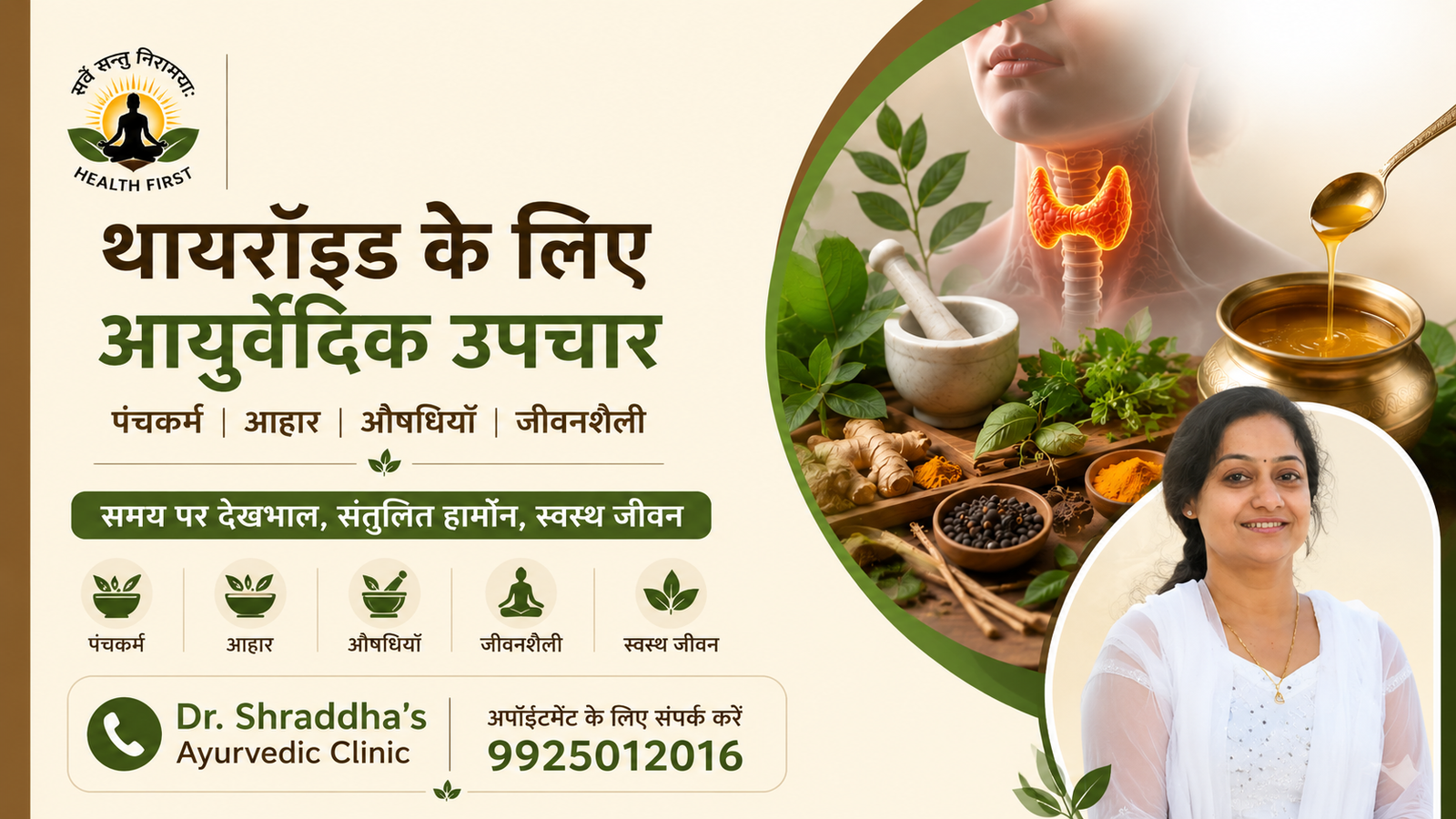
Thyroid disorders such as hypothyroidism, hyperthyroidism, and Hashimoto’s thyroiditis can affect energy levels, weight, digestion, skin, hair, and overall well-being. Ayurveda approaches thyroid health by focusing on dosha balance, agni (digestive fire), metabolism, and lifestyle correction rather than only managing symptoms.
In this article, we explore how Ayurvedic therapies, Panchakarma, diet, and herbs may support thyroid wellness, along with clinical observations and practical lifestyle guidance.
What Is a Thyroid Disorder?
| Condition | Common Symptoms |
|---|---|
| Hypothyroidism | Hypothyroidism Fatigue, weight gain, constipation, hair loss |
| Hyperthyroidism | Hyperthyroidism Weight loss, palpitations, sweating, anxiety |
| Hashimoto’s | Autoimmune thyroid inflammation |
| Subclinical Hypothyroidism | Mild TSH elevation with subtle symptoms |
How Ayurveda Views Thyroid Problems
According to Ayurveda, thyroid dysfunction may be associated with:
Kapha imbalance
sluggish metabolism, weight gain
Vata imbalance
stress, anxiety, irregular body functions
Pitta imbalance
excessive heat, irritability, hyperactivity
Ama accumulation
impaired digestion and toxin buildup
The treatment goal is to restore agni, improve metabolism, and support healthy tissue nourishment.
Ayurvedic Therapies for Thyroid Support
1. Panchakarma (Detoxification)
May help improve digestion, metabolism, and dosha balance.
Commonly used therapies:
2. Herbal Support
Traditionally used formulations may include:
Always use Ayurvedic medicines under qualified medical supervision.
3. Diet & Lifestyle
Helpful practices:
Clinical Insights
Published clinical studies have reported improvements in TSH levels, fatigue, constipation, edema, hair loss, and overall quality of life among patients receiving Ayurvedic interventions. However, individual results vary depending on the type and severity of thyroid disorder.
Foods to Prefer
| Hypothyroidism Support | Hyperthyroidism Support |
|---|---|
| Bitter gourd | Coconut |
| Fenugreek | Cucumber |
| Warm spices | Sweet fruits |
| Light vegetables | Ghee (moderate) |
When Should You Consult an Ayurvedic Doctor?
Seek professional guidance if you experience:
Conclusion
Ayurveda offers a holistic approach to thyroid wellness through Panchakarma, herbs, diet, and lifestyle modifications. While severe thyroid conditions may still require conventional medical care, many individuals seek Ayurvedic support to improve metabolism, digestion, energy levels, and overall hormonal balance.
For personalized thyroid management, consult a qualified Ayurvedic physician who can assess your prakriti, dosha imbalance, and health history.